


Natural oils can support psoriasis care by contributing to moisturising body and scalp formulations that complement medical treatments. Marking World Psoriasis Day, this article explores how skinification and everyday care needs inform formulation, examining six botanical oils, alongside key ingredient selection considerations.
Psoriasis can affect more than the skin, influencing everyday comfort, confidence and routine. This World Psoriasis Day, the “Look Beyond My Skin” campaign is putting young people at the centre, giving them a platform to share what living with the condition is really like. Encouraging us to listen and recognise the person and struggles behind the condition, which according to the International Federation of Psoriasis Associations (IFPA), nearly one third of people with psoriasis develop the disease before they turn 18.
The emotional impact is significant too. A 2026 survey by the British Skin Foundation found that four in five people living with skin conditions feel more anxious or depressed during flare-ups.
As skinification brings barrier-focused care to the body and scalp, these everyday experiences give personal care brands a starting point to formulate more thoughtful products for psoriasis-prone skin. Cold-pressed and botanical oils offer options for products focused on moisturisation, conditioning and everyday comfort.
Understanding Psoriasis and Everyday Moisturisation
Psoriasis is a chronic skin condition that can cause dry, scaly patches, itching and discomfort, causing a significant impact on everyday comfort and confidence. It commonly affects areas such as the elbows, knees and scalp. Scalp psoriasis can present additional practical challenges, as hair can make moisturising products and prescribed treatments harder to apply.
Moisturisers and emollients play an important supporting role in daily psoriasis care, helping to:
- Retain moisture
- Relieve dryness
- Soften dry, scaly skin
The American Academy of Dermatology (AAD) includes oils among the moisturising options people with psoriasis can consider. For formulators botanical oils offer emollient and conditioning properties to explore in products for dry skin and scalps. In scalp care formulations, these oils can support moisturisation alongside prescribed scalp psoriasis treatment, with the complete formulation and appropriate testing determining suitability.
The focus on everyday skin comfort connects with a wider shift in personal care, harnessing the same attention traditionally given to facial skincare to the body and scalp.
The Skinification Trend: From Skincare to Body and Scalp Care
‘Skinification’ brings facial skincare principles, such as hydration and barrier support, into body and haircare formulations. For brands considering psoriasis-prone skin, the relevant opportunity is to formulate products aimed at easing the discomfort on the body and scalp, making every day moisturising care an important consideration alongside medical treatment.
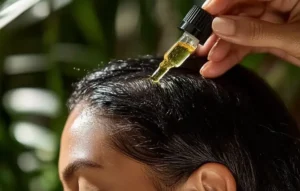
Body creams, pre-wash scalp oils and leave-in conditioning products provide different ways to incorporate moisturising care into daily routines. For people with scalp psoriasis, ease of application and residue are particularly relevant considerations. Formulators can assess how a product spreads through the hair, reaches the scalp and washes out.
The next stage of skinification also places greater emphasis on evidence and the complete product experience. Mintel’s 2027 Global Consumer Predictions identify a shift towards viewing skin health as a whole-body pursuit, extending beyond skin care alone. Alongside this, a Personal Care Insights’ report highlights expectations for scientifically supported benefits alongside appealing textures and easy application. Together, these insights reinforce the importance of assessing ingredients within the intended formulation. For example, a richer oil may suit a pre-wash product, while a leave-in product may require a lighter finish, with appropriate testing supporting the finished product’s claims.
With these formats in mind, the following oils each bring a different composition and sensory profile to explore when developing formulations for psoriasis-prone skin and scalps.
Natural Oils for Psoriasis-Prone Skin: Body and Scalp Formulations
Natural oils offer different composition and sensory profiles for moisturising products intended for psoriasis-prone skin. The following ingredients provide options to evaluate across body creams, lotions, balms and scalp oil blends.
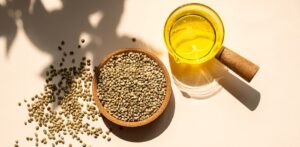
Hemp Seed Oil
Cold-pressed Hemp Seed Oil is one of the most widely used oils in skincare for dry and sensitive skin. It contains omega-3 and omega-6 fatty acids.
- Sensory profile: Lightweight, with no greasy residue.
- Formulation contribution: Anti-inflammatory and helps maintain the skins natural moisture barrier.
- Potential products: Body oils, creams, lotions and scalp oil blends, or can be applied directly to the skin.
Jojoba Seed Oil
Jojoba Oil remains one of the most versatile ingredients for scalp care applications as its unique composition closely resembles the skin’s natural sebum.
- Sensory profile: Lightweight, with a smooth, conditioned feel.
- Formulation contribution: Helps repair the skin barrier and easily absorbed.
- Potential products: Scalp serums, leave-in oil blends and body oils.
Evening Primrose Oil
Cold-pressed Evening Primrose Oil is known for its naturally occurring gamma-linolenic acid (GLA). It is a favourite ingredient for sensitive and delicate, psoriasis-prone skin.
- Sensory profile: Gentle nature and smooth skin feel.
- Formulation contribution: Reduce inflammation and improve skin hydration.
- Potential products: Body lotions, creams, serums, and body oil blends.
Argan Oil
Argan Oil is rich in fatty acids and naturally occurring antioxidants. It is widely used in hair and scalp care.
- Sensory profile: Lightweight, quickly absorbed.
- Formulation contribution: Intense hydration and anti-inflammatory benefits.
- Potential products: Pre-wash scalp oils, conditioning masks and body oils.
Borage Seed Oil
Borage Oil is one of the richest botanical sources of gamma-linolenic acid (GLA), making it a highly valued ingredient in skincare formulations.
- Sensory profile: Rich, nourishing texture.
- Formulation contribution: Premium, intense moisturisation, reducing inflammation.
- Potential products: Rich creams, body butters and concentrated skincare treatments.
Avocado Oil
Avocado Oil offers rich emollient properties, making it particularly useful for formulations developed for very dry scalp conditions, like psoriasis.
- Sensory profile: Smooth, quickly absorbed.
- Formulation contribution: Deep hydration and helps improve skin texture.
- Potential products: Intensive scalp oils, body creams and balms.
What to Look for When Choosing Oils for Psoriasis-Prone Skin
When selecting oils for psoriasis-focused skincare products, consider:
- Composition: Fatty-acid profile and relevant ingredient specifications.
- Processing: Whether cold-pressed or refined grades suit the product brief.
- Quality and sourcing: Traceability, consistency and supporting documentation.
- Stability: Compatibility with other ingredients in the formulation.
- Finished product suitability: Appropriate testing to support tolerability and claims.
O&3 Thoughts…
We think “Look Beyond My Skin” is a useful brief for formulators and brands as well as a campaign message. Nearly a third of people with psoriasis develop it before they turn 18, so the young adults at the centre of this year’s campaign have often lived with it for years and know exactly which products sting, leave residue in their hair or simply don’t get used.
For us, that makes the opportunity less about finding a single ‘hero’ oil and more about matching the right oil to the right format: a richer oil for a pre-wash scalp treatment, a light, stable base for a leave-in, and a GLA-rich oil with antioxidant support for a body balm. And with Mintel framing skin health as a whole-body pursuit that now reaches into laundry care, we expect this thinking to keep spreading well beyond the bathroom shelf.
Please note that the views/opinions expressed in this blog are solely our own. It is the responsibility of our clients to conduct the necessary testing to substantiate any claims and ensure compliance with industry standards for every ingredient. We will not accept any liability for claims made based on our content.